Product Details
--- QUICK SPEC REFERENCE ---
Product: 20-Piece UHF Adapter Master Kit — PL-259 / SO-239 to SMA, BNC, MCX, FME, TNC, Mini-UHF, F-Type
SKU: OL-4067
Total Adapters: 20 pieces
Connector Standards Covered: UHF (PL-259/SO-239), SMA, BNC, MCX, FME, TNC, Mini-UHF, F-Type
Impedance: 50 Ohm
Temperature Range: -55°C to +155°C
Applications: Ham radio, CB radio, SDR, base stations, scanners, HTs
Price: $28.98
In Stock: Yes
---
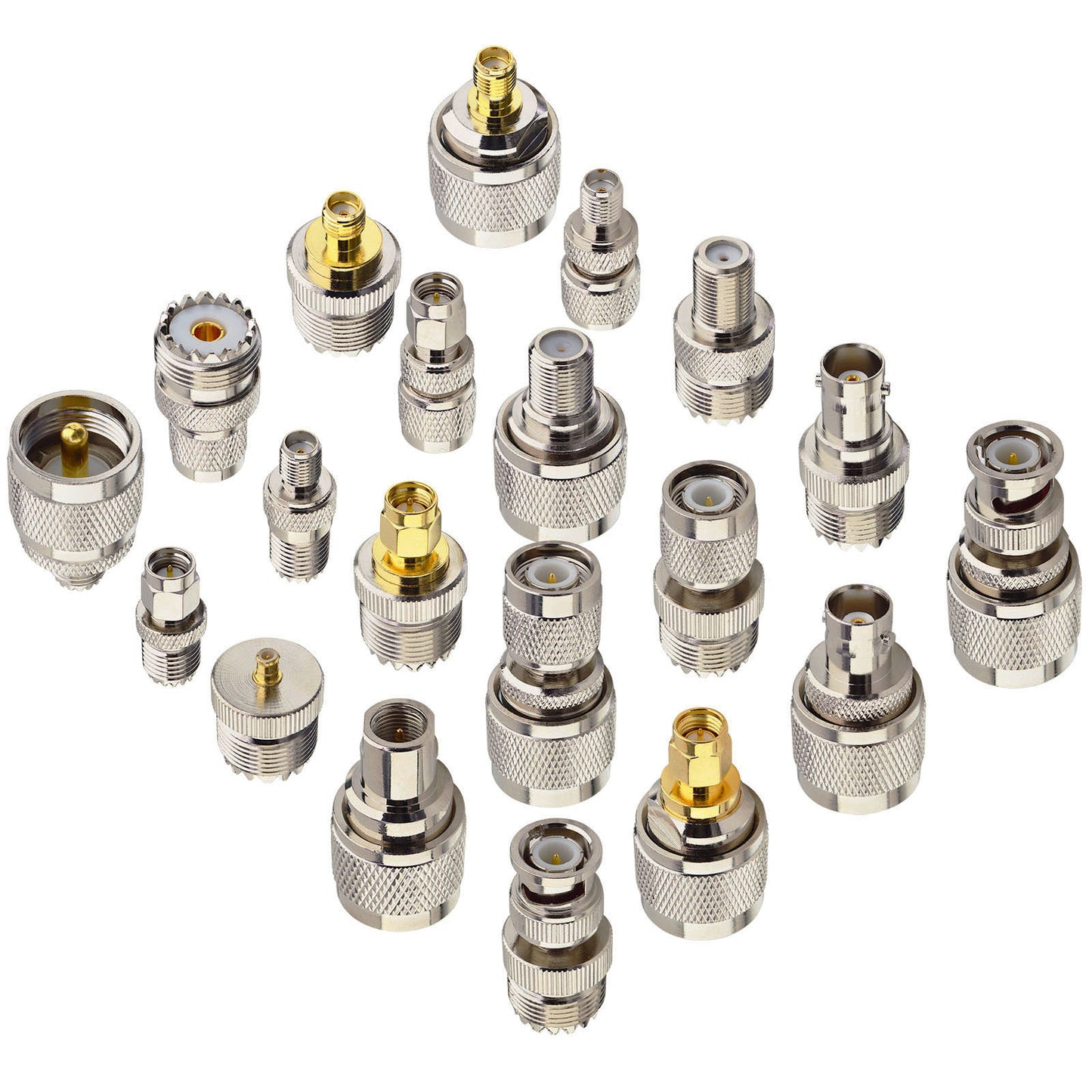
This 20-piece master kit provides the most comprehensive single-purchase UHF adapter assortment available, converting between the UHF (PL-259/SO-239) connector family and seven other connector standards: SMA, BNC, MCX, FME, TNC, Mini-UHF, and F-Type. For ham radio operators, SDR enthusiasts, and RF technicians who regularly work across equipment from different eras and manufacturers, this kit eliminates the most common "wrong connector" problem by covering virtually every UHF-to-X conversion scenario in a single package.
The UHF connector (PL-259/SO-239) remains the dominant standard for HF, CB, and lower VHF equipment despite its limitations at higher frequencies. Modern SDR receivers, spectrum analyzers, and signal analyzers use SMA or BNC. Scanners use BNC or SMA. FME connectors appear on cellular boosters. MCX connectors appear on GPS receivers and compact SDR hardware. This kit covers all of these conversion scenarios from a single UHF base, making it the practical choice for anyone bridging legacy UHF infrastructure with modern compact RF equipment.
The UHF connector's impedance limitation above 300 MHz applies to this kit — adapters involving the UHF connector are best suited for HF through lower VHF applications. For UHF and microwave work, SMA or N-type maintained throughout the signal chain is preferable. All adapters are 50 ohm and rated for -55°C to +155°C operating temperature, suitable for both indoor bench use and outdoor field deployment.
Frequently Asked Questions
The kit includes male and female gender combinations across UHF-to-SMA, UHF-to-BNC, UHF-to-TNC, UHF-to-MCX, UHF-to-FME, UHF-to-Mini-UHF, and UHF-to-F-Type conversions. Exact piece breakdown covers the most frequently needed combinations in each series, prioritizing the conversions most commonly required in ham radio, SDR, CB, and scanner applications. Check product images for the specific configuration list.
FME (For Mobile Equipment) is a small threaded connector used in cellular signal booster systems, mobile antenna installations, and some wireless broadband equipment. It is smaller than SMA and uses a push-on center conductor with threaded outer coupling. FME connectors appear on the cable assemblies of some Wilson, WeBoost, and SureCall signal booster kits. The UHF-to-FME adapters in this kit allow UHF-standard equipment to interface with FME-terminated booster accessories.
MCX (Micro Coaxial) is a compact snap-on connector approximately 30% smaller than SMB, used on GPS receivers, compact SDR hardware (including some RTL-SDR variants), automotive navigation systems, and IoT devices. MCX uses a snap-on connection mechanism rather than threading. The UHF-to-MCX adapters in this kit allow large-format UHF antenna systems to connect to compact MCX-port receivers and modules.
Yes — this is one of the primary use cases. Legacy HF and VHF antenna systems terminate in PL-259 (UHF male) connectors. Modern RTL-SDR dongles and HackRF use SMA female ports. The UHF Male to SMA Female adapter (included in this kit) provides the direct connection from the antenna feedline's PL-259 to the SDR's SMA female port, without re-terminating any cables.
The -55°C to +155°C rating indicates these adapters maintain their specified electrical and mechanical performance across that temperature range. This is relevant for outdoor deployments in extreme cold (Northern winter field day operations) or hot environments (equipment boxes in summer vehicles). The PTFE or equivalent dielectric materials used in quality adapters maintain stable dielectric properties across this range, whereas cheaper plastic dielectrics may soften or become brittle at the temperature extremes.
The practical argument is availability: in RF work, the correct adapter is frequently needed immediately and ordering individual adapters takes time. A comprehensive kit ensures the correct adapter is always on hand. The kit price is also typically lower than purchasing 20 individual adapters separately. For anyone who works regularly across multiple equipment platforms, the kit pays for itself the first time it provides the exact adapter needed without a delay.